Why Low-Heat Drying Decides Final Quality
- Drying has an outsized effect on final ingredient quality despite being an easy step to overlook.
- High-temperature drying is cheap and fast but dulls colour and degrades heat-sensitive compounds.
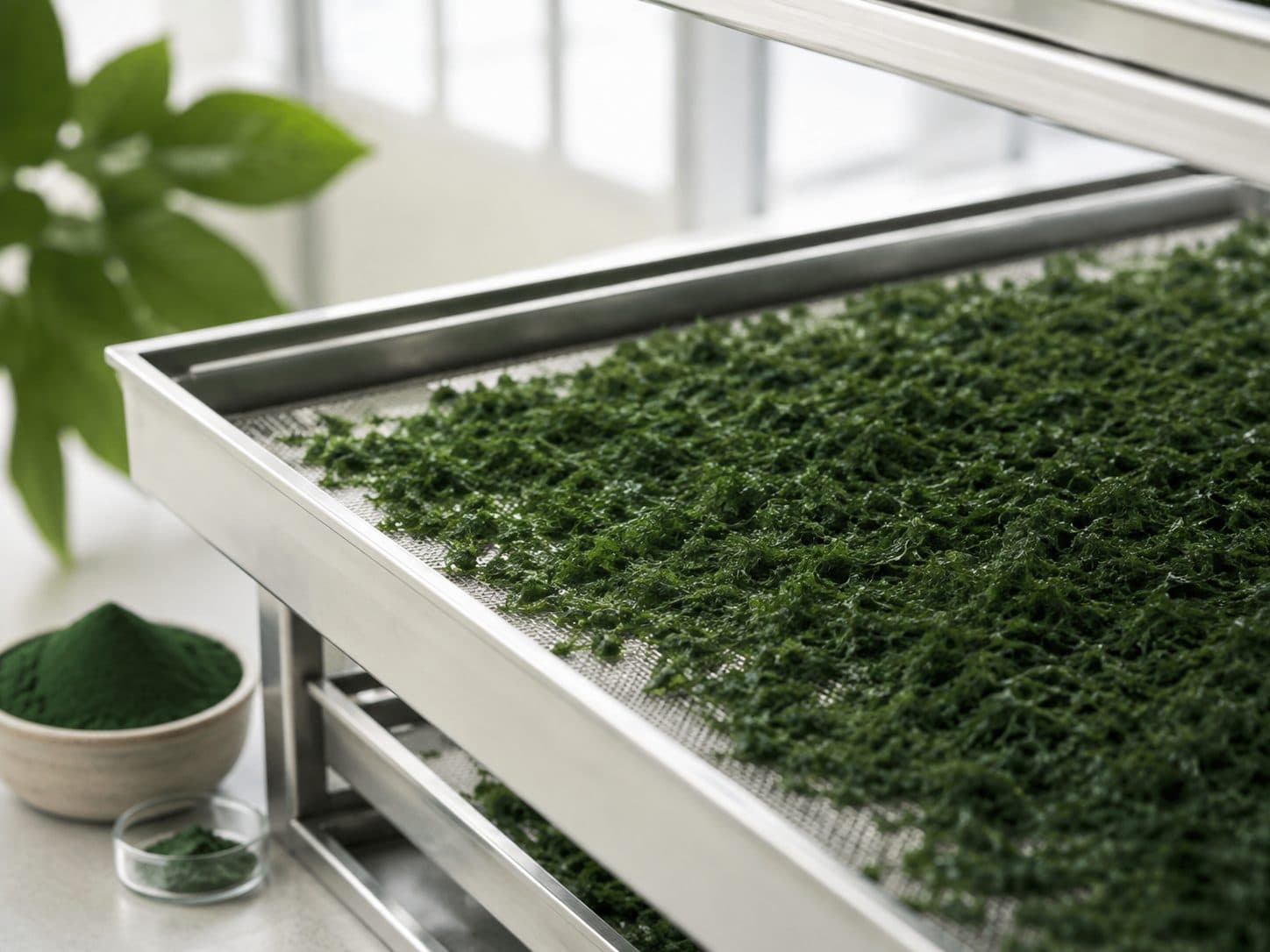
- Controlled, low-temperature drying protects phycocyanin and carotenoid content.
An Easy Step to Get Wrong
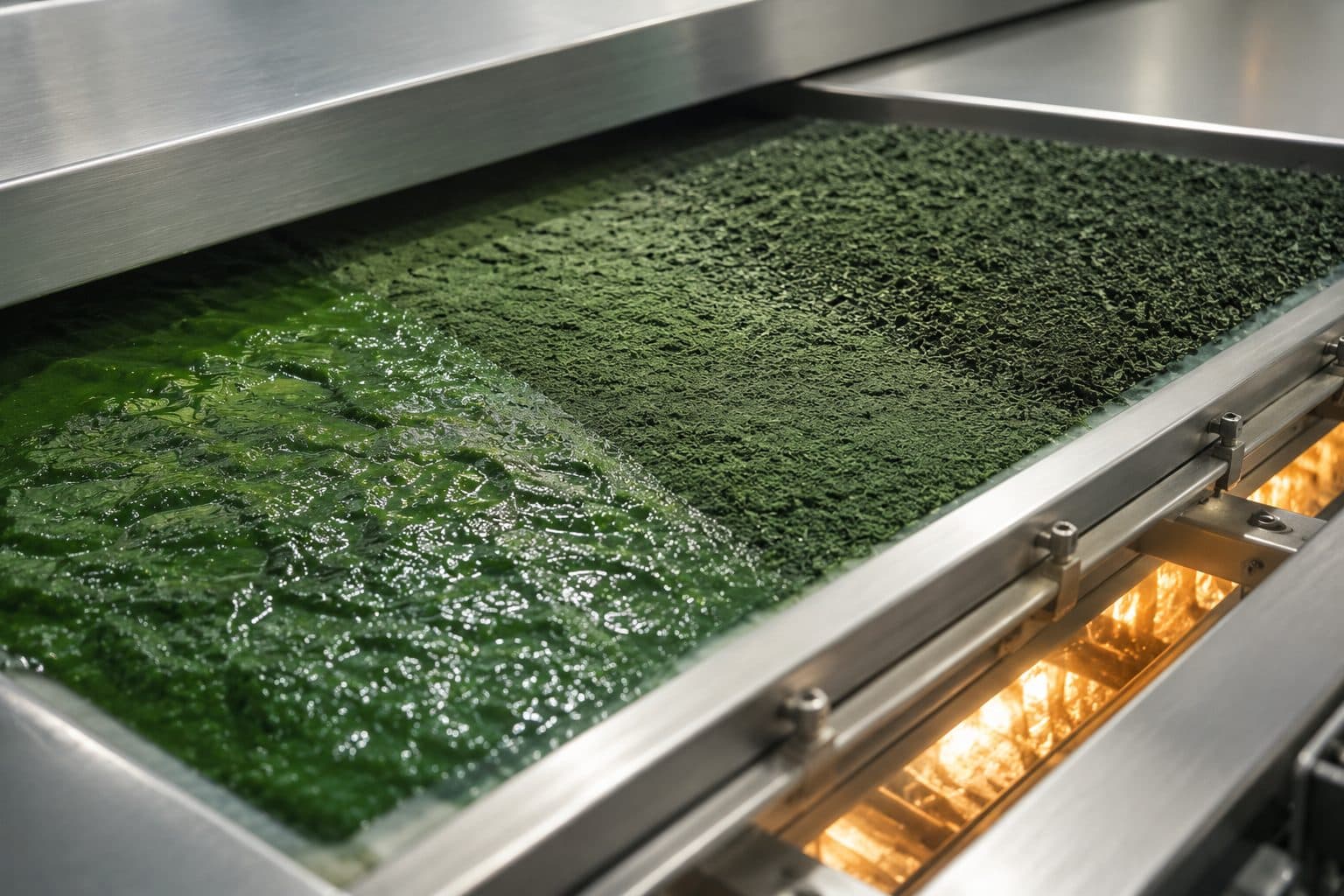
Drying is easy to overlook and easy to get wrong. Spirulina's value sits in heat- and light-sensitive compounds, so the method used to remove water has an outsized effect on the final product.
The Cost of High-Temperature Drying
Harsh, high-temperature drying is fast and cheap, but it dulls colour and degrades the very compounds that make the ingredient worth using.
What Controlled Drying Protects
Controlled, lower-temperature drying protects phycocyanin and carotenoid content, producing a deep blue-green powder rather than dulled, over-processed material.
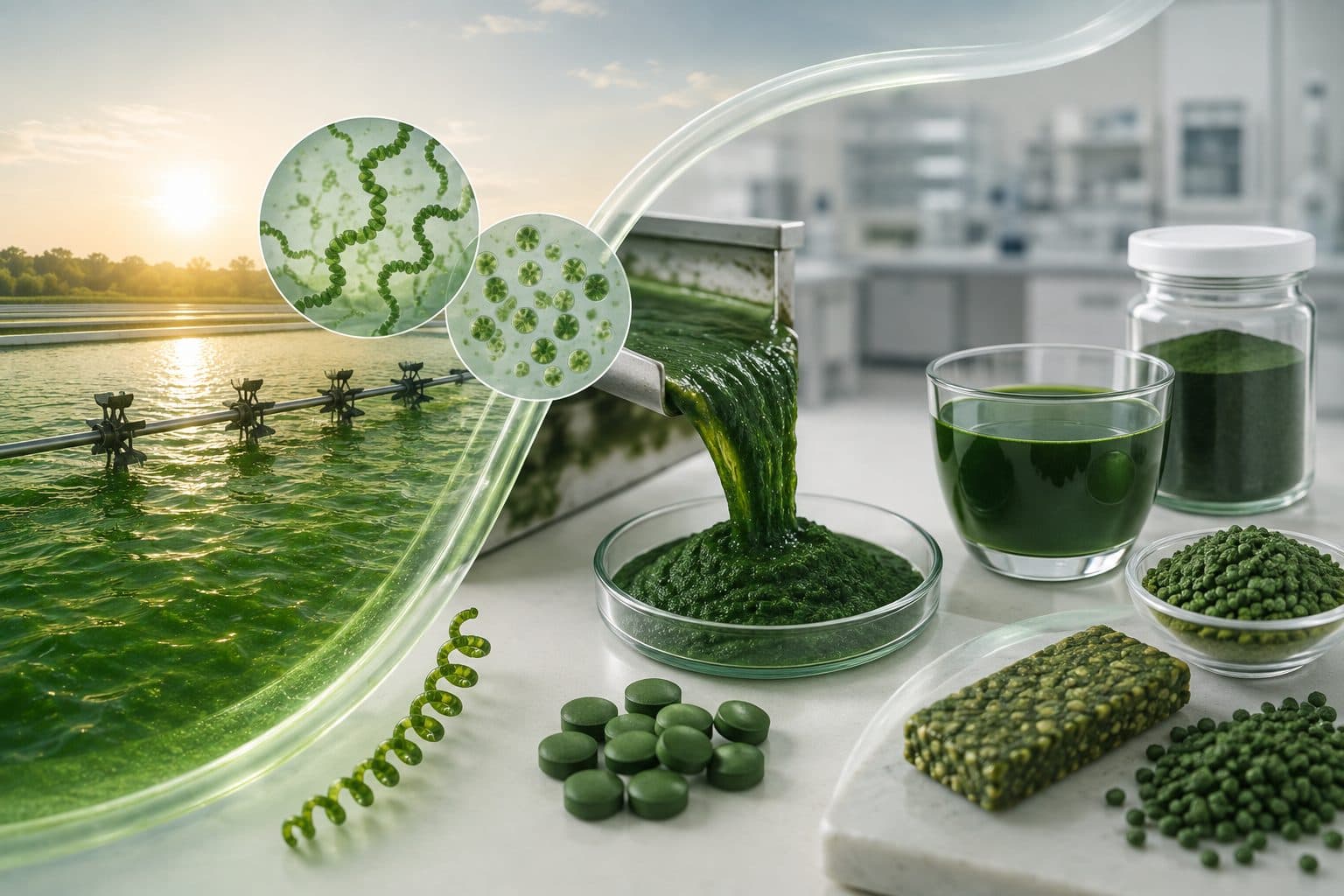
It is one of the clearest examples of a principle that runs through the whole operation: quality is built in during processing, not inspected in at the end.
Why is spirulina so heat sensitive?
Its nutritional value depends heavily on compounds like phycocyanin and carotenoids, both of which degrade under high heat and prolonged light exposure.
How can you tell if a batch was over-processed?
Colour is the clearest tell — over-processed spirulina loses its deep blue-green vibrancy and reads as dulled or faded.