Why Microalgae Are Different From Traditional Crops
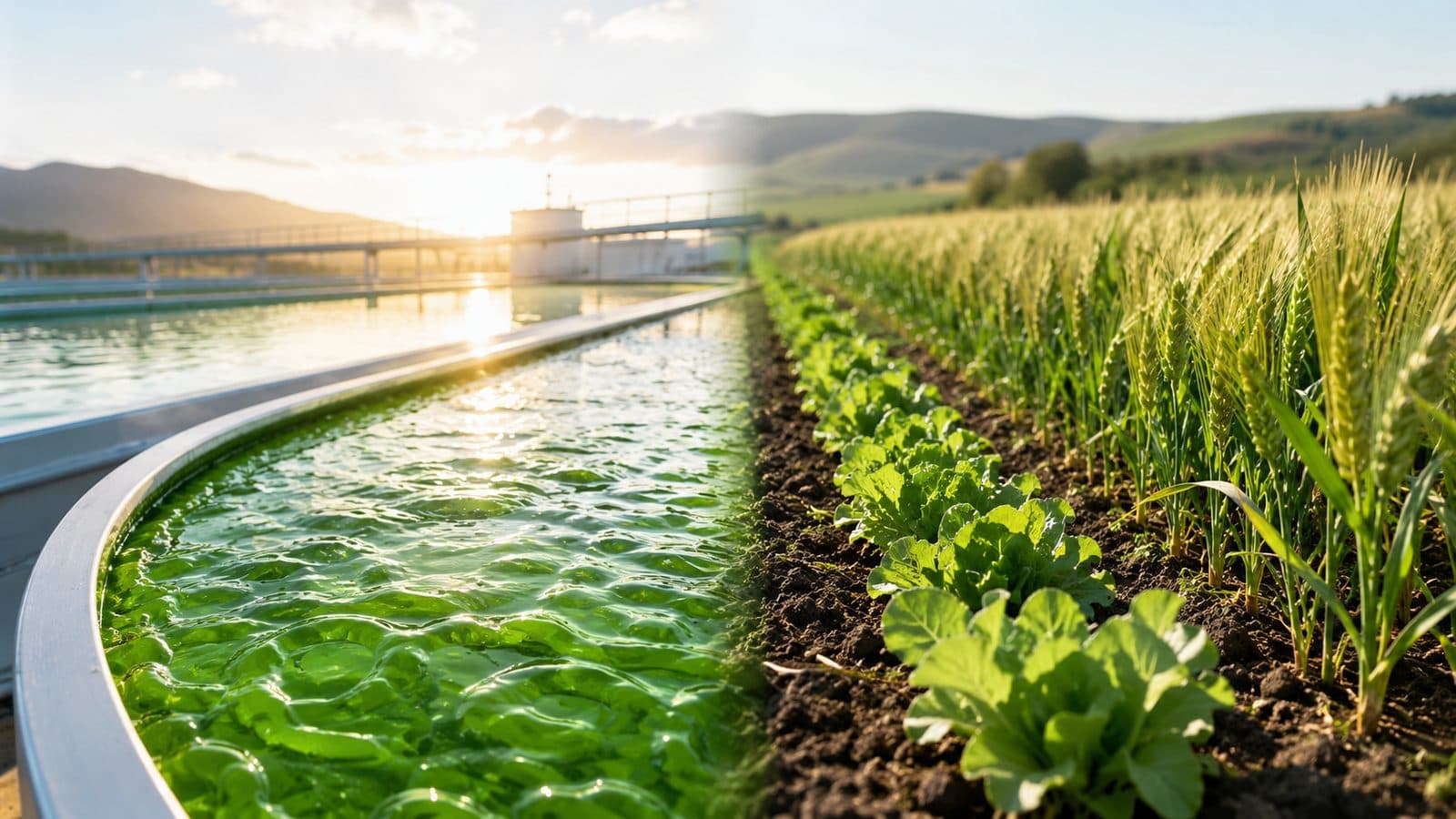
Most food ingredients begin with something familiar: a field, a plant, a harvest. Microalgae challenge that picture.
Spirulina is cultivated in an aquatic environment, grows through photosynthesis and produces biomass that can be harvested repeatedly under controlled conditions.
This makes microalgae fundamentally different from conventional agricultural crops — not necessarily better in every situation, but biologically and operationally distinct. Understanding those differences helps explain why spirulina requires its own approach to cultivation and ingredient manufacturing.
- Spirulina grows in an aquatic cultivation system rather than soil.
- The commercial crop is a microscopic biomass rather than individual plants.
- Cultivation conditions can be monitored through parameters such as water chemistry, temperature and culture density.
- Circulation plays an important role within raceway systems.
- Harvesting requires separation and dewatering of biomass from water.
- Cultivation and downstream processing can be closely connected.
- Microalgae production combines biology, agriculture and process engineering.
A Different Kind of Agriculture
Traditional agriculture usually begins with soil. Microalgae cultivation begins with water and culture biology.
Instead of planting seeds across land, producers maintain a living culture within a defined aquatic environment. This changes almost every part of the production system.
Spirulina Grows as Biomass
A conventional crop produces discrete plants or fruits. Spirulina develops as a microscopic biomass suspended within the cultivation medium, growing through cell multiplication and photosynthetic activity.
The result is not something harvested one plant at a time. It is a living biological population.
The Growing Environment Can Be More Directly Managed
Because spirulina is cultivated in a defined water system, producers can monitor important cultivation parameters more directly. Depending on the production system, these may include:
- pH
- Temperature
- Water conditions
- Nutrient availability
- Culture density
- Circulation
- Environmental conditions
This does not eliminate biological variability. It provides a framework for managing it.
Spirulina Thrives in Distinctive Conditions
Spirulina naturally favours alkaline growing environments, and that biological preference influences how cultivation systems are designed and managed.
Rather than attempting to replicate conventional freshwater crop conditions, producers create an environment appropriate for the organism.
This is an important example of how microalgae cultivation begins with biology rather than conventional farming assumptions.
Sunlight Still Matters
Despite the differences, microalgae and conventional plants share something fundamental: photosynthesis. Spirulina uses light energy as part of its growth process.
That connects microalgae cultivation to the same natural energy source that supports plants while placing it within a completely different physical growing system.
Circulation Replaces Many Conventional Field Operations
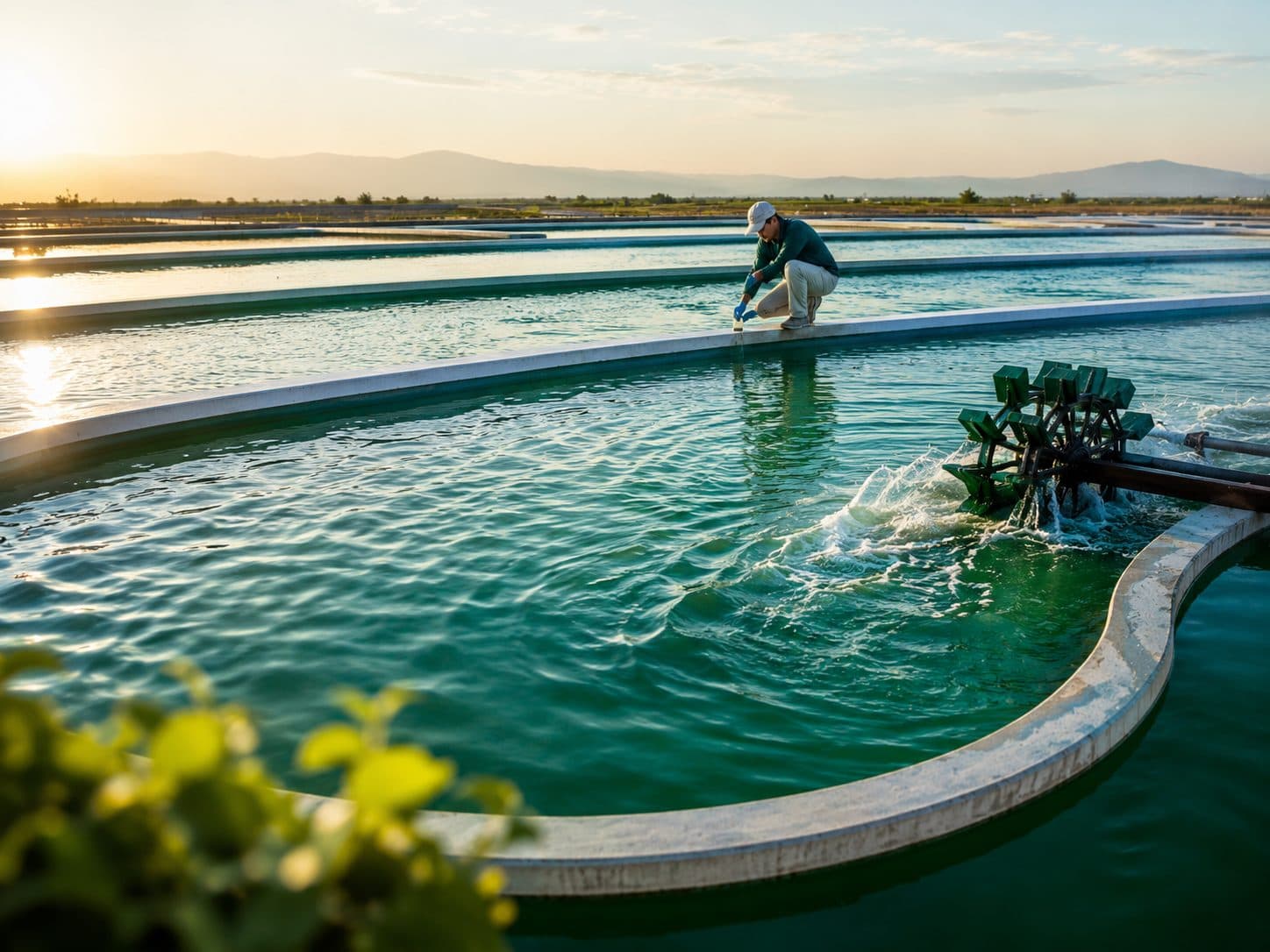
A raceway pond is dynamic. Continuous or controlled circulation helps move the culture through the growing environment, maintaining more uniform conditions within the pond and supporting exposure of the biomass to light and nutrients.
Instead of tractors moving through fields, microalgae cultivation often depends on the controlled movement of water and biomass.
Harvesting Looks Completely Different
Traditional crops may be harvested as grain, fruit, leaves or roots. Spirulina is harvested by separating microscopic biomass from water.
This creates an entirely different downstream challenge. The producer must concentrate, dewater and dry the biomass before a stable powder can be produced.
The agricultural and processing systems are therefore closely connected.
Production Can Be Continuous or Repeated
Many conventional crops follow long seasonal cycles. Microalgae systems can potentially operate through more frequent cultivation and harvest cycles depending on the production design and environmental conditions. That changes how manufacturers think about:
- Harvest timing
- Production planning
- Biomass management
- Processing capacity
Water Plays a Central Role
Water is not simply an input in microalgae cultivation. It is the physical environment in which the organism grows, which makes water management particularly important. Cultivation design must therefore consider:
- Water quality
- Water chemistry
- Circulation
- Treatment
- Reuse where appropriate
- Overall resource management
Cultivation and Processing Are More Closely Linked
For many conventional agricultural commodities, farming and ingredient processing may occur in completely different locations. Microalgae biomass is highly moist when harvested, which creates a strong reason to connect cultivation with rapid downstream handling.
For integrated spirulina operations, cultivation and processing can therefore function as parts of one continuous production system.
Biological Control Is Central
Microalgae farming is ultimately the management of a living culture. This means producers need to understand:
- Growth
- Culture health
- Environmental response
- Harvest readiness
- Biological variability
The operation is therefore part agriculture, part biology and part process engineering.
Different Does Not Automatically Mean Better
It is tempting to compare microalgae and traditional agriculture through simplistic claims. But each system has advantages, limitations and appropriate applications.
The important point is that they operate differently. Microalgae should be understood on their own biological and manufacturing terms rather than judged as though they were simply another field crop.
Conclusion
Microalgae cultivation looks unfamiliar because it represents a fundamentally different kind of agriculture. There are no rows of plants and no conventional harvest.
Instead, there is a living aquatic culture — growing through sunlight, water chemistry, nutrients and carefully managed biological conditions.
Understanding this difference helps explain why spirulina production requires specialised knowledge from cultivation all the way through processing.
Is spirulina grown in soil?
No. Spirulina is cultivated in an aquatic system, where water is the growing environment rather than simply an input.
How is spirulina harvested?
By separating the microscopic biomass from the cultivation water, then concentrating, dewatering and drying it before a stable powder can be produced.