Open Ponds, Closely Governed: Why Selectivity Beats Sterility
- Closed photobioreactors add cost, complexity and fragility that a well-managed open pond avoids.
- High-alkalinity water gives spirulina a natural competitive advantage few organisms can tolerate.
- Governance — monitoring, nutrient dosing and microscopy checks — replaces isolation as the control mechanism.
The Trade-off With Closed Systems
Closed photobioreactors promise control, but they trade it for cost, complexity and fragility. For spirulina specifically, the organism's own biology offers a different route to a clean culture.
Spirulina's Natural Selectivity
Spirulina thrives in high-alkalinity water that few competing organisms tolerate. That natural selectivity is the first line of defence: the culture stays dominant without aggressive intervention.
Governance, Not Isolation
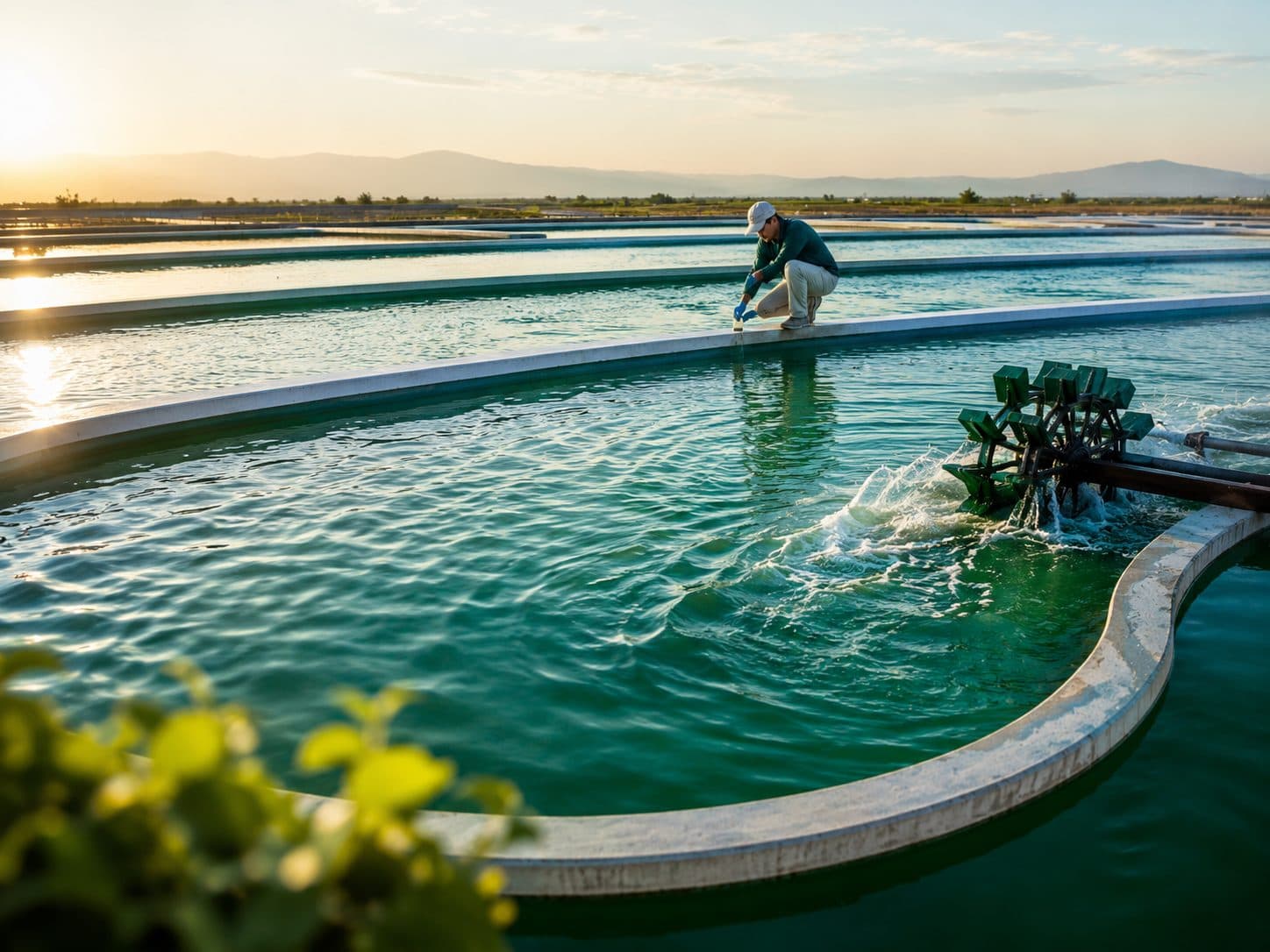
The work, then, is governance rather than isolation — monitoring water quality and alkalinity through the growth cycle, adjusting nutrients to culture demand, and confirming filament health by microscopy before any pond qualifies for harvest.
The result is a system that captures much of the consistency benefit associated with closed systems, on a footprint and cost base that keeps the ingredient viable at scale.
Why don't open ponds get contaminated more easily?
Spirulina's preference for highly alkaline water is naturally hostile to most competing organisms, which keeps the culture dominant without needing a fully sealed system.
Is open-pond cultivation less consistent than closed systems?
Not when it's closely governed. Continuous monitoring of water quality, nutrients and filament health closes much of the consistency gap at a fraction of the cost.