From Oceans to Orbit: Spirulina as a Model Food
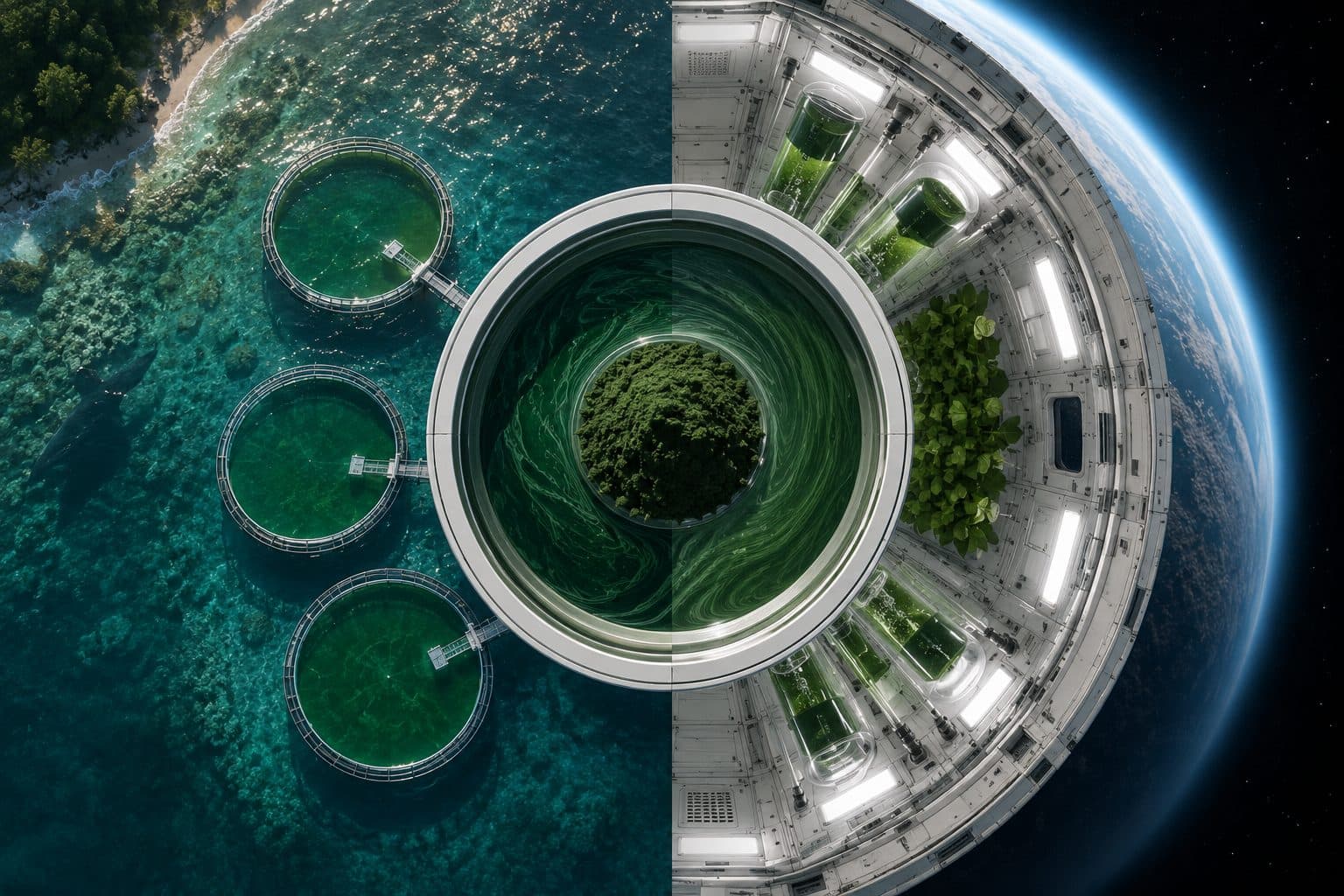
- Spirulina has been studied as a candidate food for closed-loop life-support systems.
- It produces more protein per litre of water and per hectare than conventional protein crops.
- The case for spirulina is resource efficiency, not novelty.
Tested Under Extreme Scrutiny
Spirulina has been studied as a candidate food for closed-loop life support, where every litre of water and square metre of growing area has to earn its place. Few foods survive that kind of scrutiny.
The Case Is Efficiency
The reason is efficiency: spirulina produces more protein per litre of water and per hectare than conventional protein crops, while fixing carbon as it grows.
Those same properties — density, efficiency, a low resource footprint — are exactly what make it compelling for terrestrial nutrition under pressure from population and climate.
Arithmetic, Not Novelty
It is a useful reminder that the case for spirulina is not novelty. It is arithmetic.
Has spirulina really been studied for space applications?
Yes — it has been researched as a candidate food for closed-loop life-support systems, where resource efficiency is scrutinised far more tightly than on Earth.
What makes spirulina resource-efficient?
It produces more protein per litre of water and per hectare than conventional protein crops, while fixing carbon as it grows.