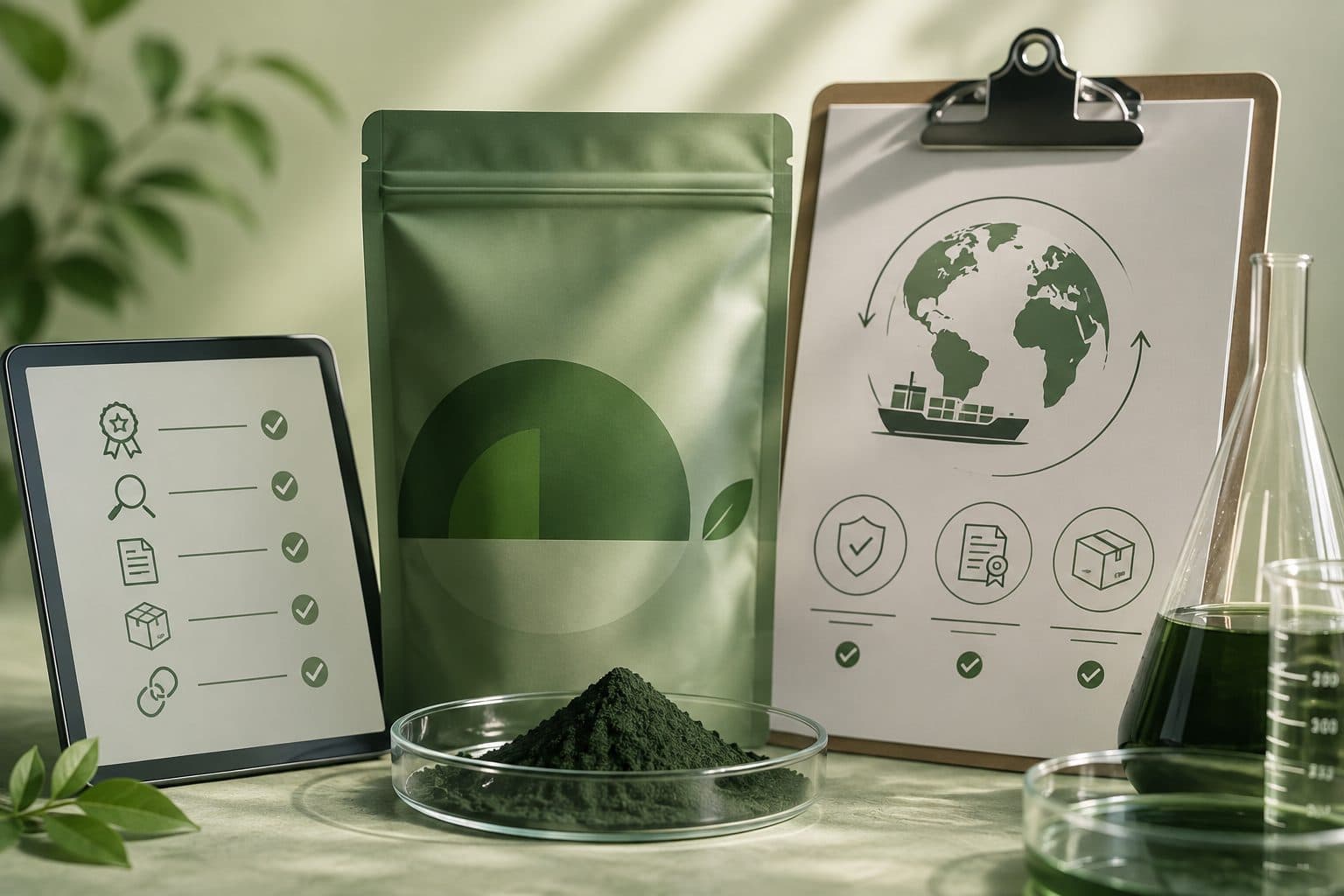
What Defines Premium Spirulina?
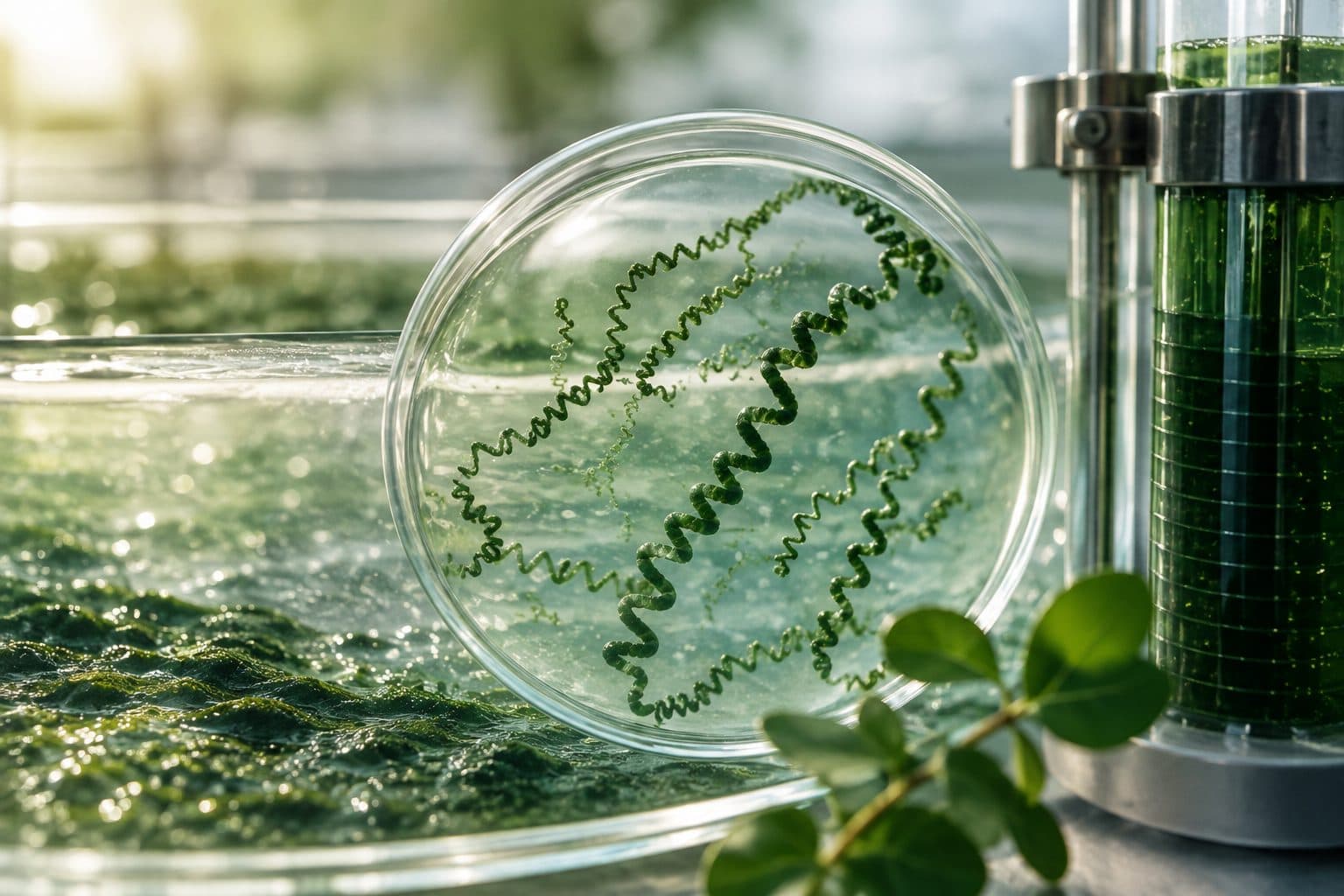
With the growing demand for spirulina across nutraceuticals, functional foods and wellness products, manufacturers today have more sourcing options than ever before. However, while many ingredients may appear similar, the quality behind them can vary significantly.
A premium spirulina ingredient is not defined by a single specification or nutritional value. Instead, it is the result of multiple factors working together — from cultivation and harvesting to processing, quality verification and documentation.
Understanding these quality indicators helps manufacturers, formulators and procurement teams evaluate spirulina beyond marketing claims and make informed sourcing decisions.
- Premium spirulina begins with controlled cultivation and responsible processing.
- Ingredient quality is influenced by multiple production and verification factors — not a single nutritional specification.
- Consistency between production batches is essential for commercial manufacturing.
- Analytical verification and technical documentation support informed sourcing decisions.
- Long-term supplier reliability is built on transparency, quality systems and consistent performance.
Processing Can Preserve — or Compromise — Quality
After cultivation, spirulina enters several processing stages before becoming a finished ingredient. These stages generally include harvesting, dewatering, drying, milling and packaging.
Each step influences the final ingredient. Improper handling or excessive processing may affect:
- Natural colour
- Pigment stability
- Aroma
- Moisture
- Ingredient consistency
Processing therefore plays an essential role in preserving the characteristics established during cultivation.
Consistency Matters More Than One Good Batch
One high-quality batch does not necessarily define a high-quality supplier.
For manufacturers producing commercial products, consistency from one batch to the next is often one of the most important indicators of supplier reliability.
Consistent production helps manufacturers achieve:
- Reliable formulation performance
- Stable product appearance
- Predictable manufacturing outcomes
- Simplified quality control
- Greater confidence in long-term supply
This consistency is supported through defined manufacturing procedures, quality specifications and analytical verification rather than relying on visual inspection alone.
Documentation Reflects Supplier Transparency
High-quality spirulina is supported not only by production practices but also by clear and transparent technical documentation.
For manufacturers, documentation provides confidence that every batch has been evaluated against predefined quality specifications before reaching production. A reliable spirulina supplier should be able to provide documentation that supports both quality evaluation and regulatory requirements.
- Certificate of Analysis (COA)
- Provides batch-specific analytical results, including nutritional composition and quality parameters.
- Technical Data Sheet (TDS)
- Summarises the ingredient’s physical characteristics, product specifications, recommended storage conditions and handling information.
- Product Specification Sheet
- Defines the quality parameters that every production batch is expected to meet.
- Certification Documents
- Where applicable, certification documents demonstrate compliance with recognised food safety and manufacturing standards.
Comprehensive documentation not only simplifies supplier qualification but also supports product development, quality assurance and regulatory review.
Looking Beyond Price
Price is often one of the first factors considered during ingredient sourcing. However, selecting spirulina based solely on cost may overlook several factors that directly influence long-term product performance and manufacturing efficiency.
A premium spirulina ingredient offers value through:
- Consistent batch quality
- Reliable technical documentation
- Defined quality specifications
- Stable ingredient performance
- Transparent communication
- Long-term supply reliability
When manufacturers consider the total value of an ingredient rather than only the purchase price, they are often better positioned to achieve consistent product quality over time.
Common Mistakes When Evaluating Spirulina
Evaluating spirulina using only one specification can result in an incomplete understanding of overall ingredient quality. Some of the most common mistakes include:
- Comparing suppliers only by price.
- Looking only at protein percentage.
- Ignoring processing methods.
- Not reviewing technical documentation.
- Overlooking analytical verification.
- Assuming all spirulina ingredients are produced under similar manufacturing conditions.
A more comprehensive evaluation helps manufacturers identify suppliers capable of delivering reliable quality over the long term.
Buyer’s Checklist
Before selecting a spirulina supplier, ask:
- Is a Certificate of Analysis (COA) available for every batch?
- Are quality specifications clearly defined?
- What analytical parameters are routinely verified?
- Which food safety and quality certifications are available?
- How is batch-to-batch consistency maintained?
- Is technical documentation readily available?
- Does the supplier provide technical support when required?
Looking Beyond a Single Specification
Conclusion
Premium spirulina is defined by the consistency with which it is cultivated, processed, verified and documented. While nutritional composition remains an important consideration, true ingredient quality is established through disciplined production practices, analytical verification and transparent technical documentation.
For manufacturers and ingredient buyers, evaluating these factors together provides a more complete understanding of supplier capability and long-term ingredient reliability. As demand for high-quality spirulina continues to grow, selecting a supplier based on quality systems rather than a single specification helps support better sourcing decisions and more consistent product outcomes.
Does higher protein always indicate better spirulina?
No. While protein is an important quality parameter, overall ingredient quality also depends on cultivation, processing, verification and batch consistency.
Why is documentation important when sourcing spirulina?
Technical documentation provides objective evidence of product quality, supporting supplier qualification and regulatory compliance.
What documents should buyers request?
A Certificate of Analysis (COA), Technical Data Sheet (TDS), Product Specification Sheet and relevant certification documents are commonly requested.
Why is batch consistency important?
Consistent quality between production batches helps manufacturers maintain reliable product performance and minimise formulation variability.
Can visual appearance alone determine spirulina quality?
No. Appearance can provide useful observations, but analytical verification and technical documentation remain the most reliable indicators of ingredient quality.