
Phycocyanin:Spirulina's SignatureBlue Pigment
Nature's Blue. Science's Interest.
Phycocyanin is a natural blue pigment-protein complex found in spirulina. It gives spirulina its vibrant blue-green colour and is one of the most studied compounds in microalgae.
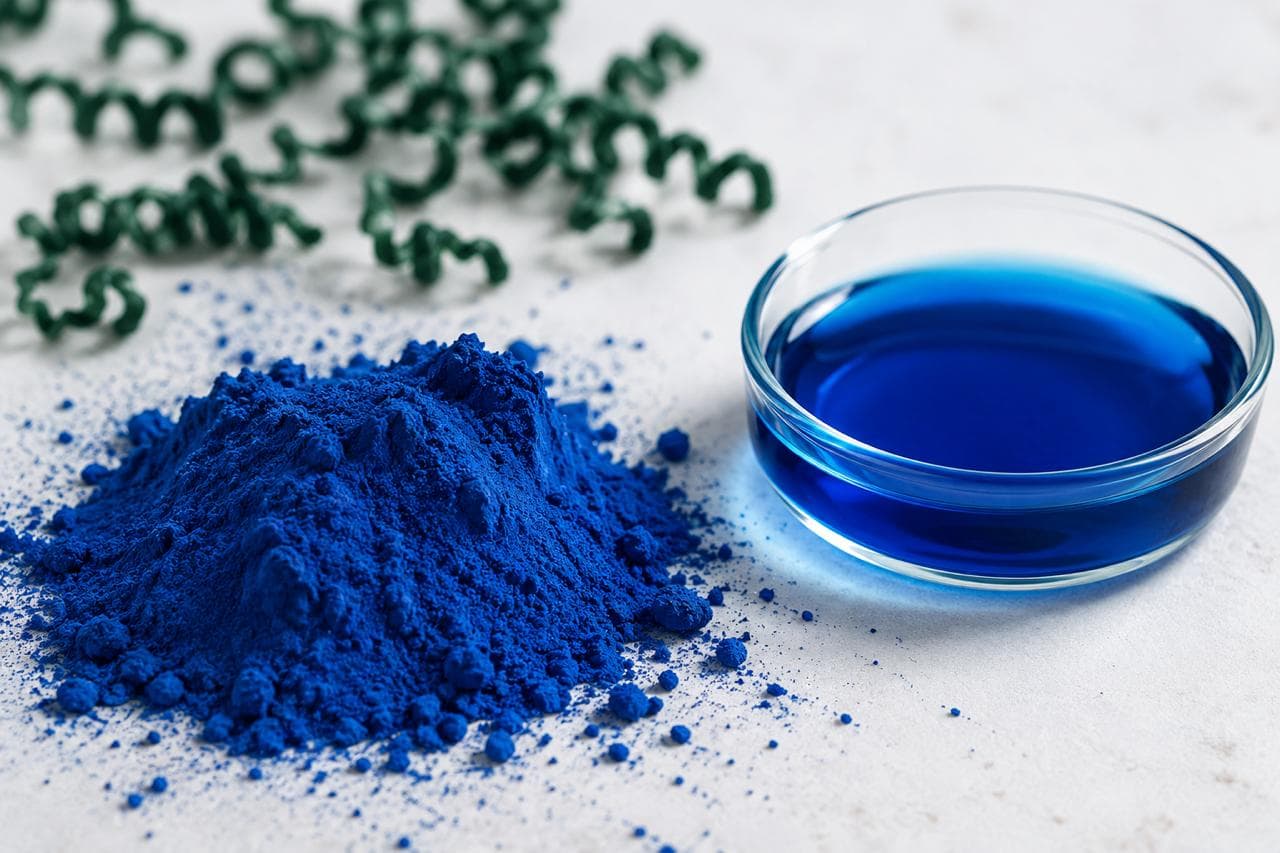
What is Phycocyanin?
Naturally Blue
A naturally occurring blue pigment-protein found in spirulina.
A Phycobiliprotein
Part of a family of light-harvesting pigment-protein complexes.
Gives Spirulina Its Blue-Green Character
Works alongside chlorophyll and other pigments to create spirulina's distinctive appearance.
Light Harvesting
Plays an important biological role in capturing light for photosynthesis.
Water Soluble
Unlike chlorophyll, phycocyanin is water-soluble — contributing to its usefulness as a naturally derived blue colour source.
How It Works in Spirulina
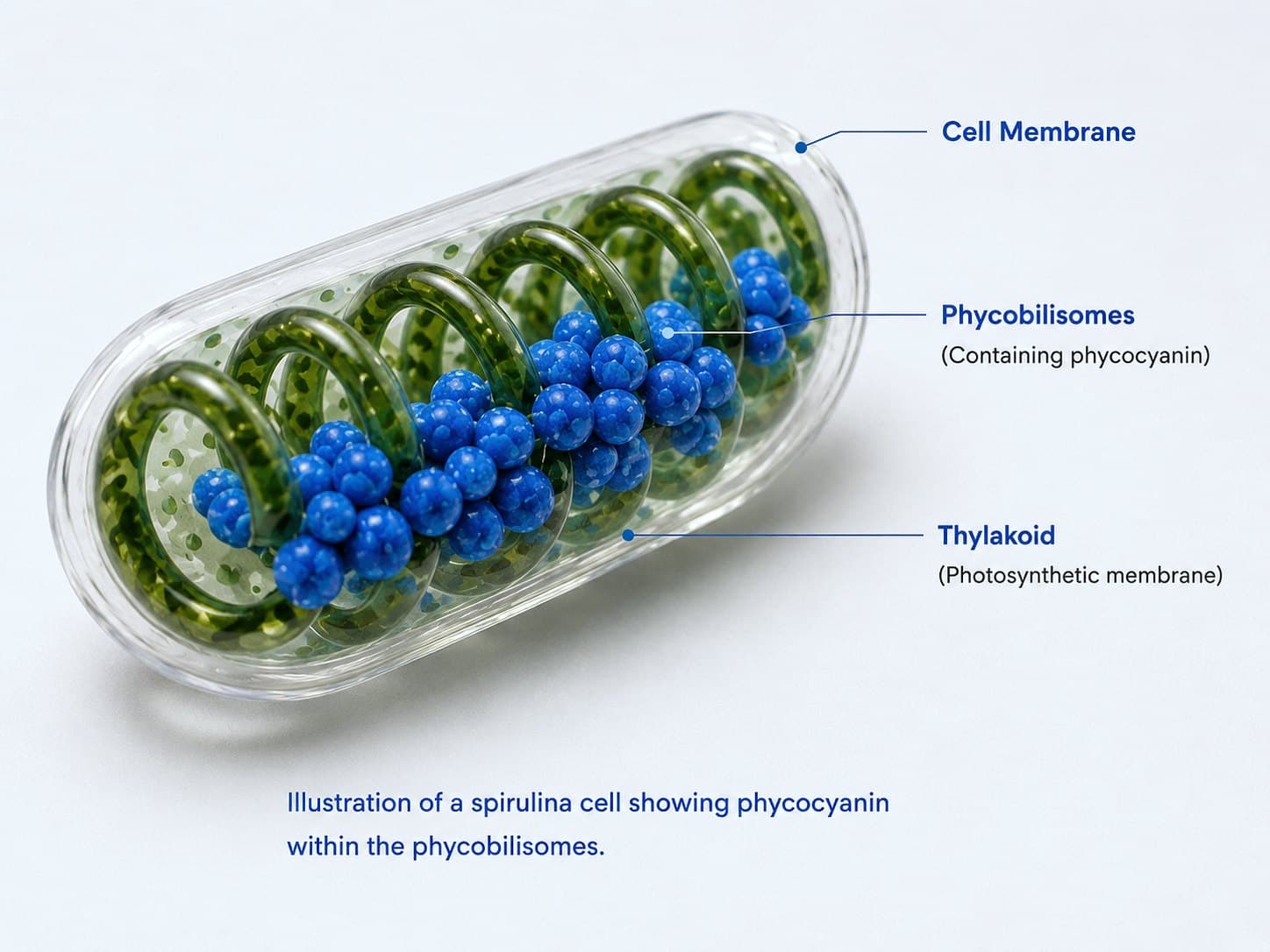
Within spirulina, phycocyanin is organised within light-harvesting structures called phycobilisomes. These structures absorb wavelengths of light that chlorophyll does not capture as efficiently and transfer that energy toward the photosynthetic machinery.
Light
Solar energy enters the cell.
Phycobilisomes
Phycocyanin absorbs specific wavelengths of light.
Energy Transfer
The captured light energy is transferred to the photosynthetic machinery.
Photosynthesis
Energy is used to produce biomass and release oxygen.
From Green Spirulina to Blue
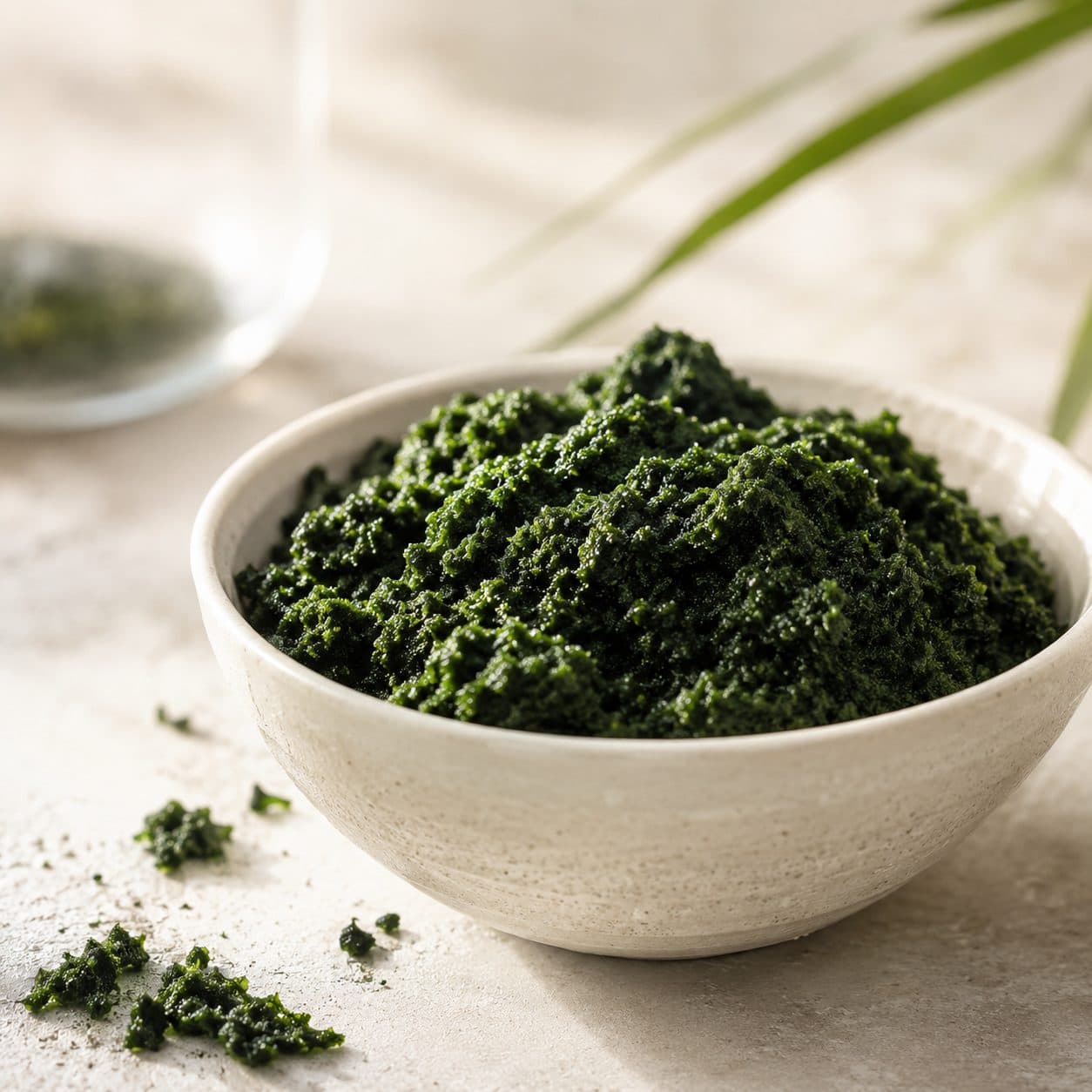
Green Spirulina Biomass
In its natural state, spirulina appears green due to chlorophyll and other pigments.
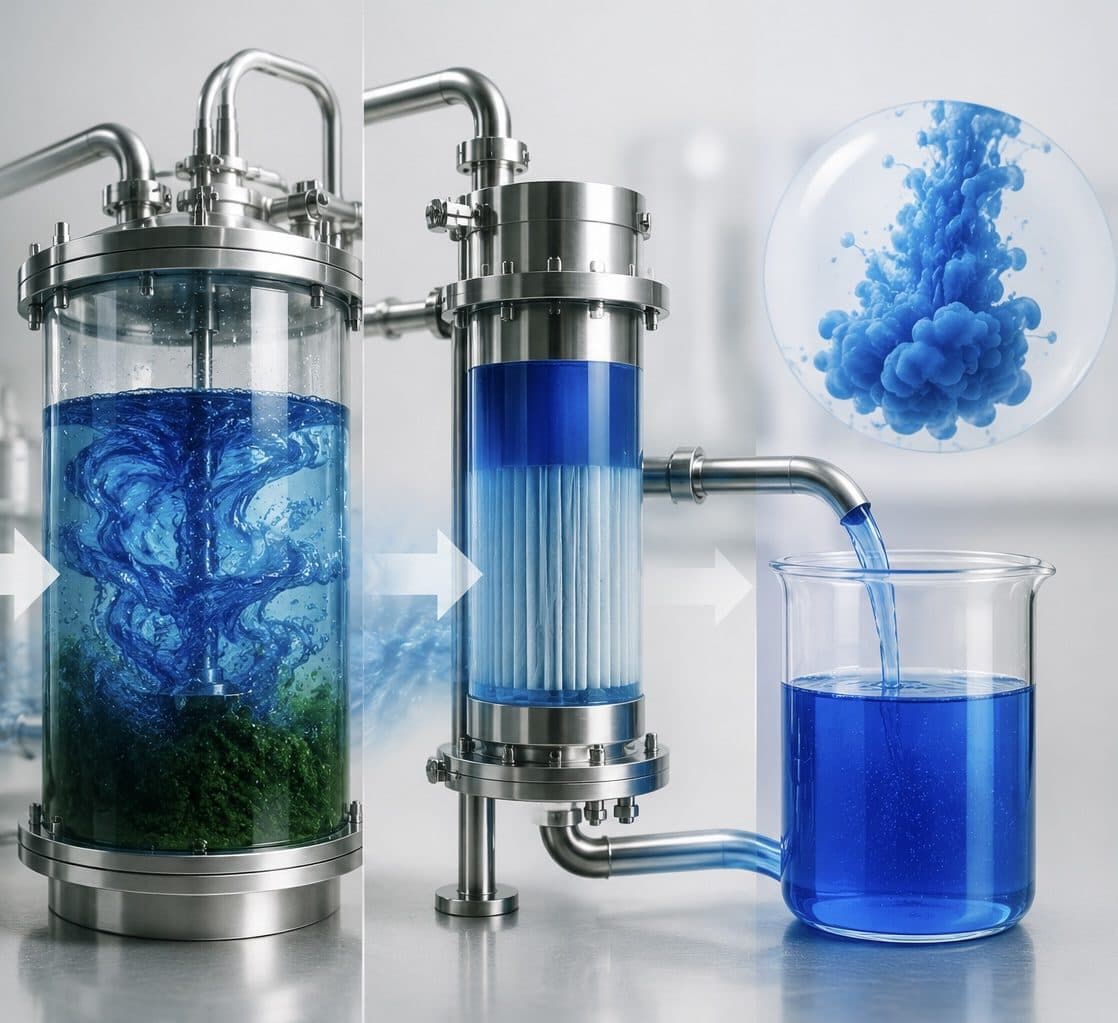
Extraction
Phycocyanin is separated from the biomass using purified water extraction.
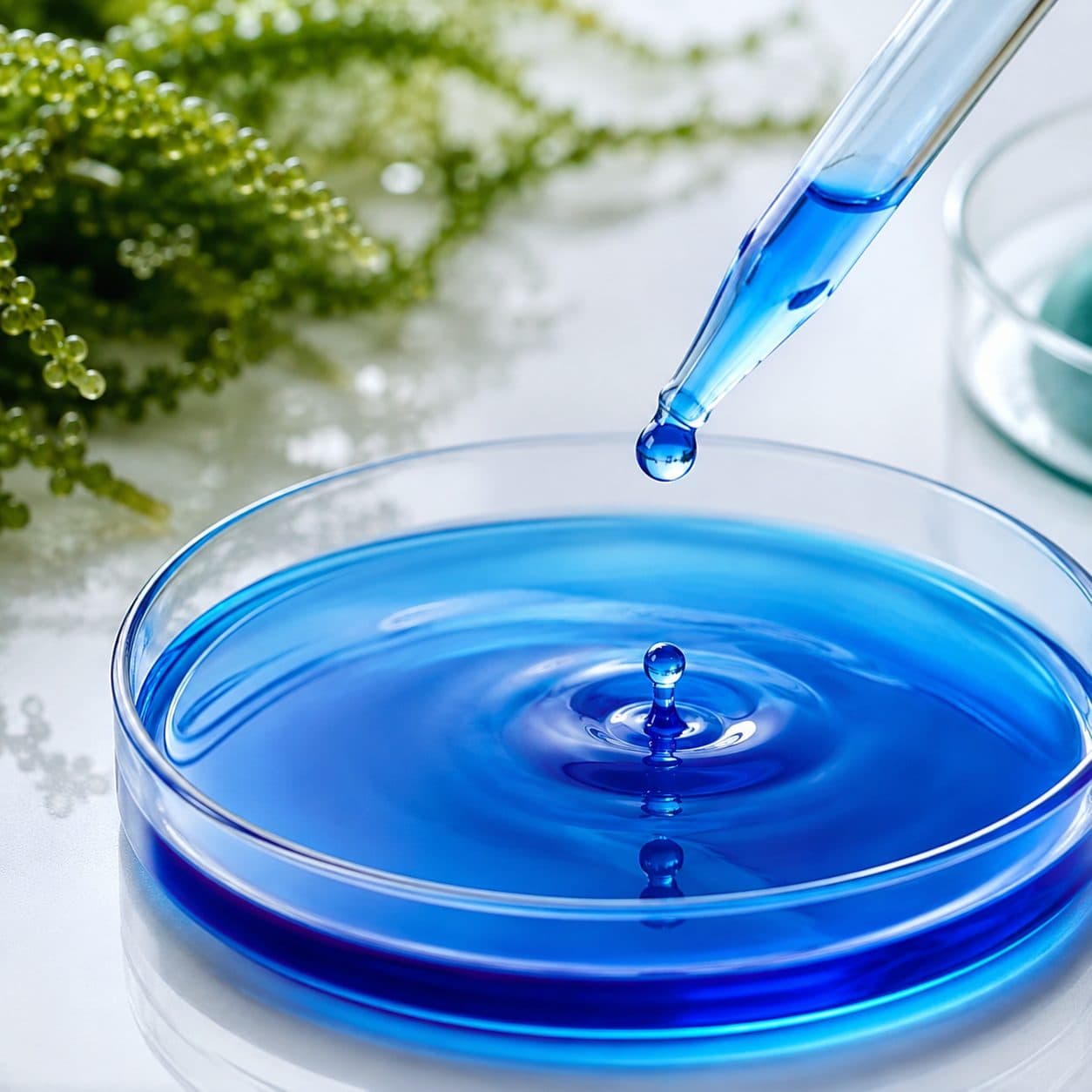
Brilliant Blue Phycocyanin
Once isolated, phycocyanin reveals its intense and vibrant blue colour.
Spirulina appears predominantly green, yet within its cells lies an intensely blue pigment-protein.
When phycocyanin is separated from the surrounding biomass, its characteristic blue colour becomes visible.
Why Phycocyanin Matters
Nature's Rare Blue
Blue is relatively uncommon among naturally derived food colour sources, making phycocyanin particularly distinctive.
Colour From Spirulina
Phycocyanin can provide blue colour without relying on synthetic blue dyes.
Scientific Interest
Its molecular structure and biological properties continue to be investigated across food science, biotechnology and nutrition research.
A Delicate Pigment
Phycocyanin is sensitive to factors such as heat, light and pH — making careful processing and formulation particularly important.
A Delicate & Sensitive Pigment
Phycocyanin's structure can be influenced by environmental conditions.
Heat
High temperatures may cause degradation and a loss of colour intensity.
Light
Prolonged exposure to strong light can affect stability and colour vibrancy.
pH
Extreme pH conditions may impact the structural stability of phycocyanin.
Careful cultivation, processing and handling help preserve the natural quality and vibrant blue colour of phycocyanin.