Spirulina in Functional Foods & Beverage Innovation
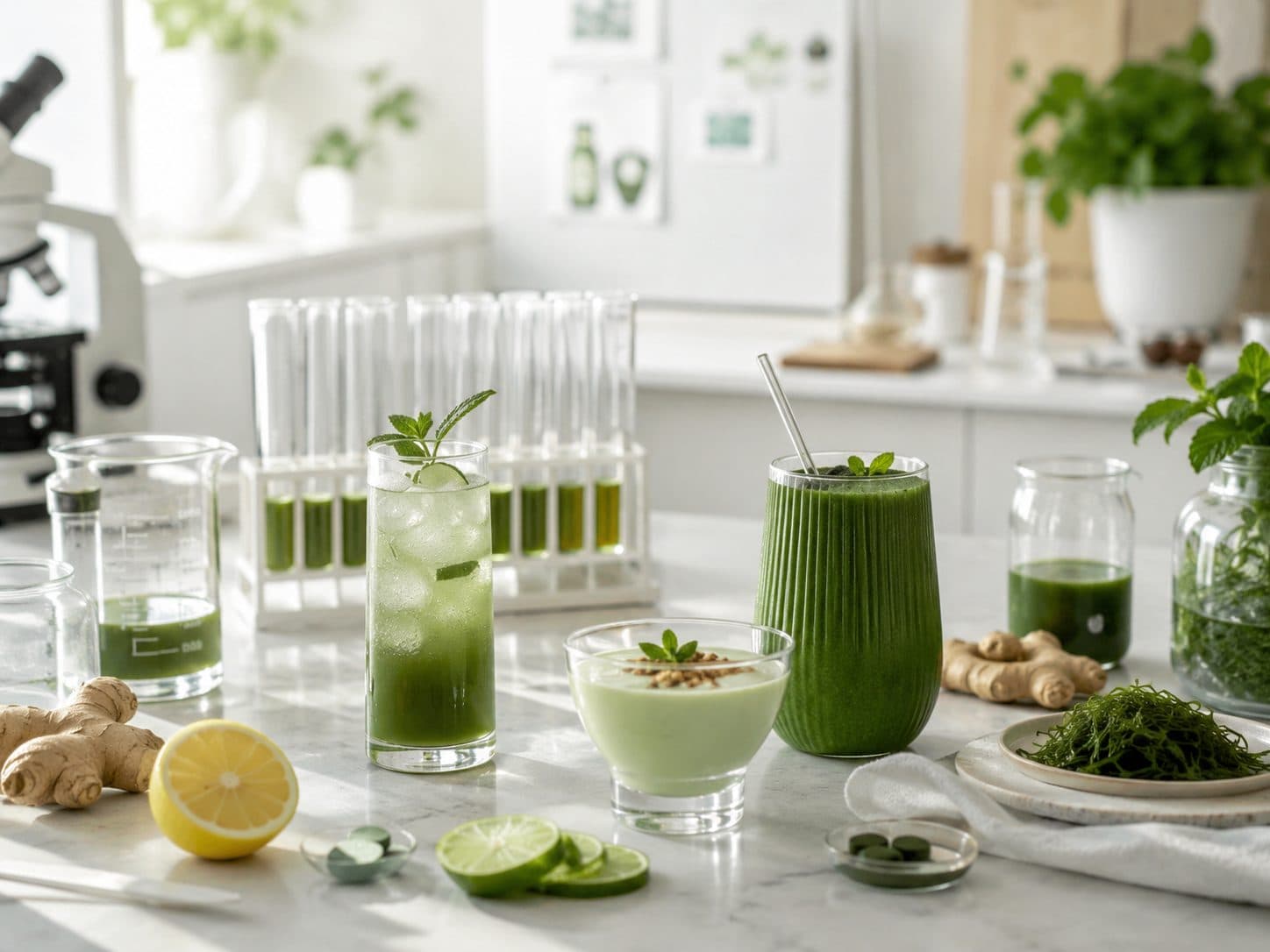
Functional foods and beverages are evolving beyond basic nutrition. Consumers increasingly encounter products that combine everyday eating and drinking occasions with ingredients selected for their nutritional value, natural origin and distinctive product identity.
Within this landscape, spirulina offers product developers an interesting combination: a naturally nutrient-rich ingredient with an unmistakable colour and sensory profile. But those same characteristics mean spirulina cannot simply be added to every food or beverage in the same way.
For formulators, the opportunity lies in understanding the ingredient — and designing the product around it.
- Spirulina's distinctive colour should be considered during product design, not after formulation.
- Flavour and aroma become particularly important in food and beverage applications.
- Beverage formulations should evaluate wetting, dispersion, suspension and sedimentation in the actual product system.
- pH and thermal processing may influence the characteristics of a spirulina-containing formulation.
- Ingredient combinations can affect colour, taste, texture and stability.
- Higher inclusion levels are not automatically better.
- Manufacturing sequence and processing conditions can influence finished-product performance.
- Stability should be evaluated in the final formulation and packaging.
- Strong product development works with spirulina's natural characteristics rather than against them.
Spirulina Is Not an Invisible Ingredient
Some ingredients can be incorporated into a formulation with very little effect on its appearance. Spirulina is different. Its naturally occurring pigments give it a distinctive blue-green appearance that can visibly influence the finished product, even before flavour or texture are considered.
This can be an advantage. Rather than trying to hide spirulina completely, food and beverage developers can use its natural identity as part of the product concept. The key is intentional formulation: spirulina should look like it belongs in the product, not like it was added afterwards.
Colour Can Become Part of Product Design
Colour is one of the first characteristics consumers notice in food and beverages. With spirulina, formulators need to consider how its natural colour interacts with the rest of the formulation. The final appearance may depend on:
- Spirulina inclusion level
- Base formulation colour
- Other ingredients
- pH
- Processing conditions
- Light exposure
- Storage conditions
A green smoothie blend, for example, naturally accommodates spirulina's appearance differently from a pale beverage or bakery product. This makes colour an important product-development consideration, not simply an aesthetic decision made at the end.
Flavour Needs to Work With the Ingredient
Spirulina has its own characteristic taste and aroma. In food and beverage applications, these characteristics are more exposed than they may be in capsules or coated tablets. Product developers may therefore explore flavour systems and ingredient combinations that complement the intended spirulina level rather than simply attempting to mask it. Factors to consider include:
- Inclusion level
- Sweetness
- Acidity
- Flavour profile
- Other botanical ingredients
- Protein sources
- Serving size
- Method of consumption
A successful formulation creates balance between nutritional intent and consumer experience.
Dispersibility Matters in Beverages
For beverage developers, one of the most practical considerations is how the ingredient behaves in liquid. Spirulina powder needs to be evaluated within the actual beverage system because performance can differ depending on the formulation. Developers may consider:
- Initial wetting
- Dispersion
- Mixing requirements
- Sedimentation
- Suspension
- Particle characteristics
- Finished beverage texture
A powder that performs well in one liquid system may behave differently in another. Water-based beverages, smoothies, powdered drink mixes and more complex formulations each create different processing environments, so dispersibility should be evaluated in the actual intended formulation.
pH and Heat Processing Need Careful Consideration
Many beverages and foods operate across very different pH ranges, which can be relevant when working with naturally coloured ingredients. The behaviour and appearance of spirulina-containing formulations should therefore be assessed under the intended product conditions — pH, processing, other ingredients and storage considered together rather than in isolation.
Many commercial foods and beverages also undergo thermal processing such as pasteurisation, baking, cooking or hot filling. Spirulina naturally contains pigments and other components whose characteristics can be influenced by processing conditions, so developers should consider where spirulina enters the manufacturing process and what conditions it will experience afterwards.
Texture and Ingredient Pairing
Food and beverage formulation is not only about nutrition, flavour and colour. The amount and physical characteristics of spirulina incorporated into a formulation may influence smoothness, thickness, powderiness, suspension, mouthfeel and visual uniformity — particularly in beverages and nutrition mixes where the ingredient remains physically noticeable.
Spirulina also rarely exists alone. It may be combined with fruits, vegetables, plant proteins, botanical ingredients, fibres, vitamins and minerals, natural flavours or other functional ingredients. These combinations influence far more than the nutritional panel — they can change colour, taste, texture, stability and processing behaviour.
Good formulation therefore considers the complete ingredient system, rather than optimising spirulina independently and adding everything else afterwards.
Different Food Categories Create Different Opportunities
Spirulina can be explored across a broad range of functional food concepts, depending on the intended formulation and applicable regulatory requirements.
- Powdered Nutrition Blends
- Dry mixes can provide a straightforward format for incorporating spirulina alongside other nutritional ingredients.
- Nutrition Bars and Bites
- Spirulina can contribute both nutrition and a distinctive visual identity, although flavour balance and colour should be considered carefully.
- Smoothies and Drink Mixes
- These formats can naturally accommodate spirulina's colour and nutritional positioning.
- Functional Beverages
- Beverage development requires particular attention to dispersibility, stability, pH and sensory performance.
- Savoury Food Concepts
- Spirulina's characteristic colour and flavour may also complement selected savoury applications where its natural identity becomes part of the product experience.
The most suitable application is the one in which spirulina's characteristics support the product concept rather than fight against it.
More Spirulina Is Not Always Better
When developing a functional product, it can be tempting to maximise the inclusion level of a recognised nutritional ingredient. But formulation is a balance. Increasing spirulina may also increase its influence on colour, flavour, aroma, texture, dispersibility and manufacturing behaviour.
The appropriate inclusion level should therefore be established around the objectives of the finished product. A successful functional food is not defined by how much of an ingredient can physically be added. It is defined by how successfully nutrition, processing and consumer experience work together.
Processing Sequence, Stability and Packaging
The point at which spirulina is introduced during manufacturing can matter. Depending on the formulation, developers may evaluate mixing sequence, hydration, shear, thermal exposure, holding time and the addition of other ingredients. Small changes in processing sequence can sometimes influence dispersion, appearance and overall product uniformity.
An ingredient can also meet its specification when it enters the factory and still behave differently once incorporated into a finished food or beverage. Over time, the complete formulation may be influenced by light, oxygen, moisture, temperature, pH, other ingredients, packaging and storage conditions. Finished-product stability therefore needs to be assessed using the actual formulation and intended packaging.
Packaging should likewise be considered during development rather than after the formulation has been finalised, since it influences exposure to light, moisture and oxygen. Packaging, formulation and processing should be developed as parts of the same product system.
Scale-Up Can Change the Formulation
A formulation prepared successfully in a laboratory does not always behave identically on commercial equipment. Larger production volumes can change mixing efficiency, hydration, shear, heat exposure, processing time, filling behaviour and suspension.
Pilot-scale trials can help identify these differences before a full commercial launch — especially valuable for ingredients such as spirulina whose colour and physical behaviour make variation relatively easy to observe in the finished product.
Conclusion
Spirulina creates interesting opportunities for functional food and beverage innovation because it brings more than nutritional composition to a formulation. It brings colour, character and a recognisable natural identity.
Those characteristics also create formulation questions around flavour, dispersibility, pH, processing, texture, stability and packaging. The goal is therefore not simply to find more products in which spirulina can be added. It is to create products in which spirulina genuinely belongs.
Can spirulina be used in functional beverages?
Spirulina can be incorporated into beverage formulations, but developers should evaluate factors such as dispersibility, pH, sensory characteristics, processing conditions and finished-product stability.
Does spirulina affect the colour of food?
Yes. Spirulina has a naturally intense blue-green appearance and can significantly influence the colour of a finished formulation.
Can spirulina be used in heated foods?
The suitability of spirulina depends on the specific formulation and processing conditions. Thermal exposure should be considered during product development because processing can influence naturally occurring ingredient characteristics.
How can spirulina's flavour be managed?
The appropriate approach depends on the product concept and inclusion level. Formulators may evaluate complementary flavours, sweetness, acidity and other ingredients as part of sensory development.
Is ingredient stability enough to predict beverage shelf life?
No. The complete formulation, pH, processing, packaging and storage environment all influence finished-product stability, so the commercial product should undergo appropriate stability evaluation.